Wet, nuno and needle felting: how three techniques differ
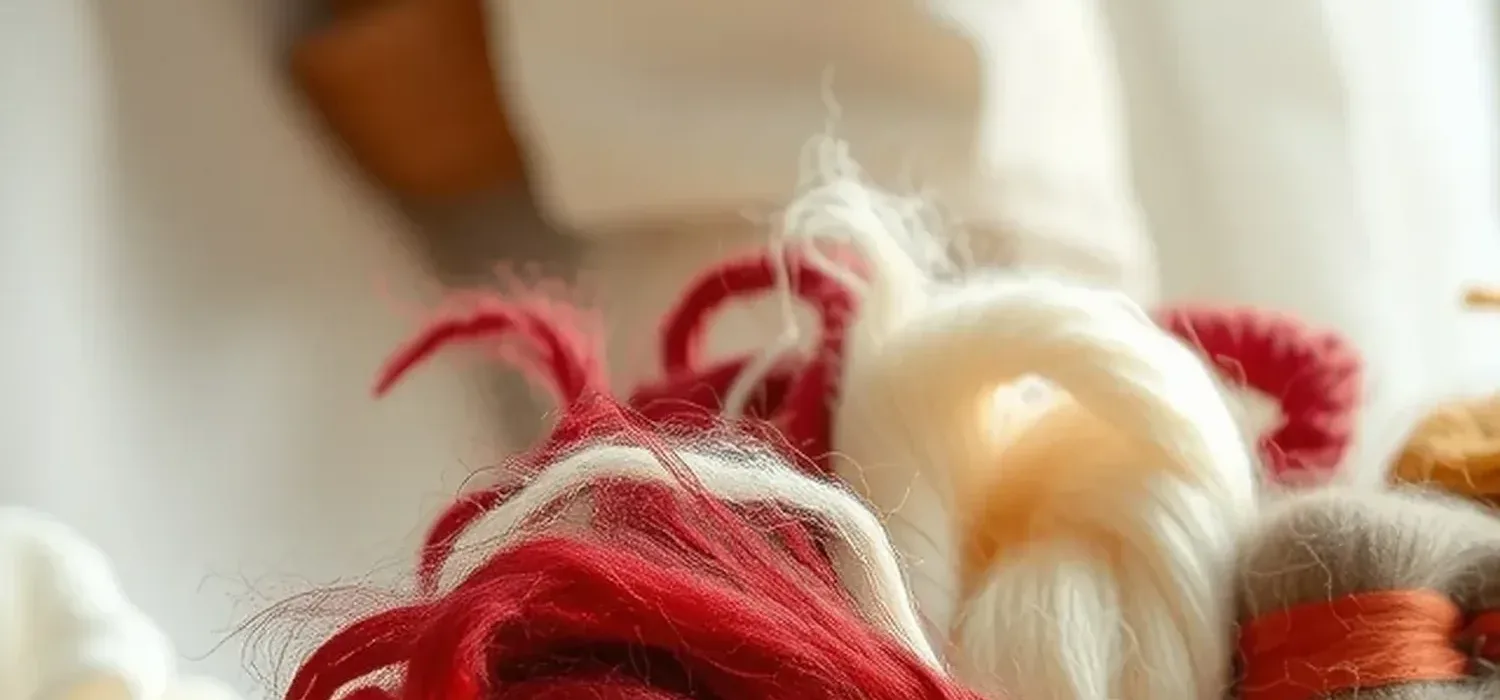
Felt is one of the oldest known textiles: felted pieces around 2,500 years old survive from the Pazyryk burials in Siberia. In our studio in Lillehammer we work with three felting techniques. They start from the same raw material — wool — but end up as very different pieces.
Why wool felts at all
The surface of each wool fibre is covered with tiny overlapping scales. Warm water softens and swells the fibres, and soap helps them slide. With friction and pressure, the scales let each fibre move one way but not back, so the fibres creep along, tangle and lock together. Once they are locked, they stay. That is all felting is — and it is also why a wool jumper shrinks in a hot wash.
Each technique simply controls this process: how much the fibres move, in which direction and for how long.
Wet felting: soap, water and patience
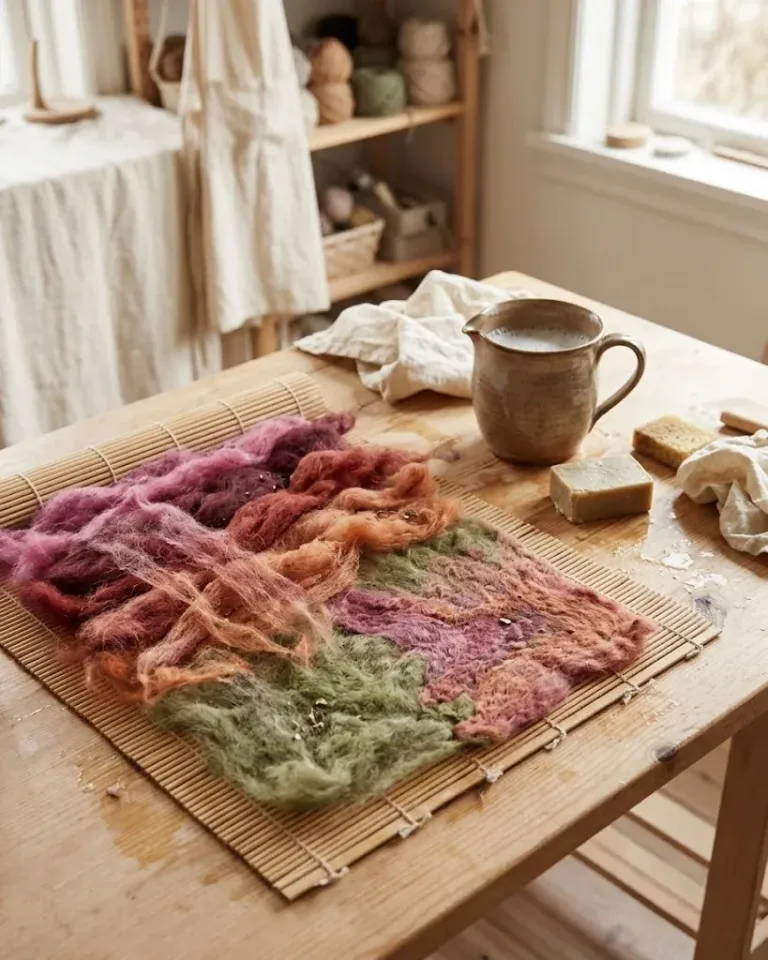
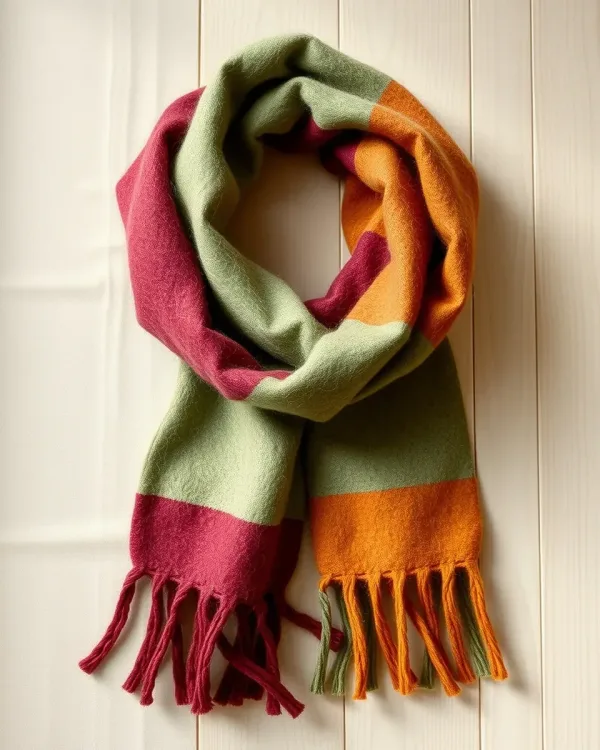
Wet felting is the classic technique. Thin layers of fine wool, often merino, are laid out crosswise in the colours of the future piece. Then come warm soapy water and the hands. First the fibres are pressed gently so they hold together; then the piece is rolled — hundreds of times, in different directions — until the wool shrinks into a strong, flexible fabric.
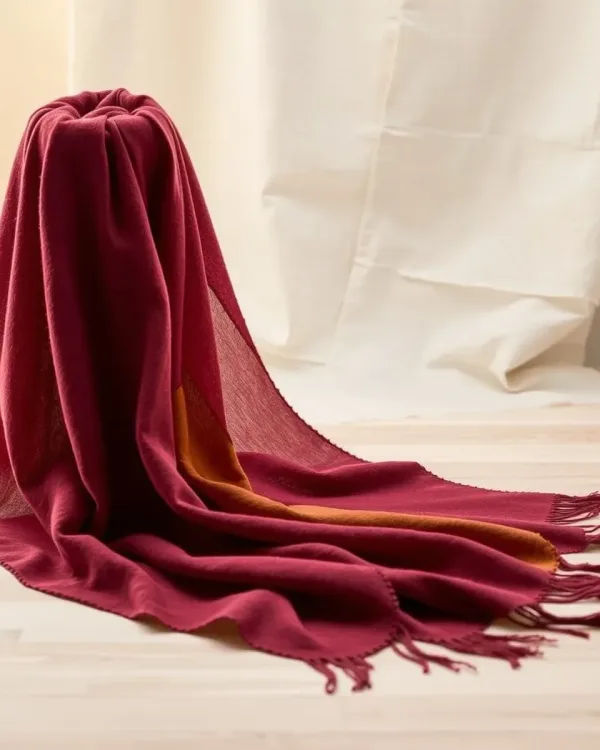
A wet-felted piece usually shrinks by 30–40% while it is being made, sometimes more, depending on the wool and the layout. That is why the layout is always much larger than the finished scarf, hat or bag. It is also why wet felting allows seamless shapes: a hat or a bag can be felted around a template in one piece.
Well suited to: scarves, wraps, hats, bags, wall panels and felted pictures.
How to recognise it: a soft, even surface, colours that blend into each other, often no seams at all.
Nuno felting: wool and silk together
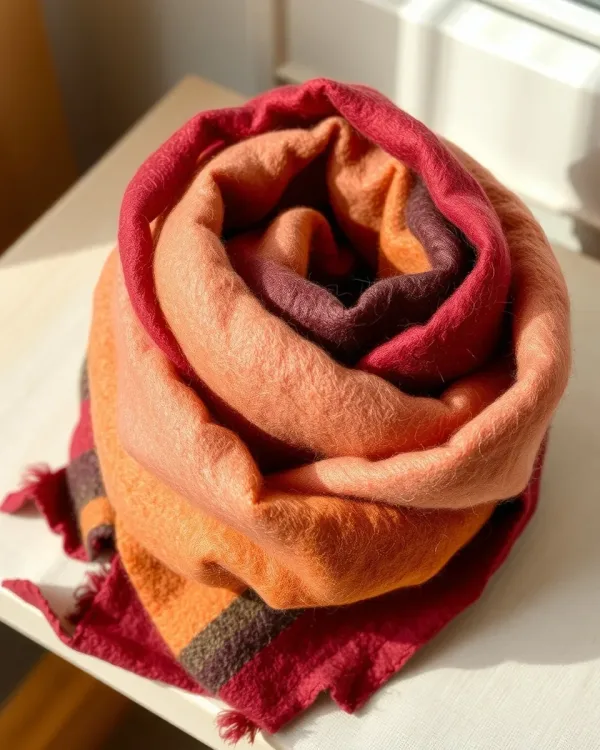
Nuno felting is a young technique: it was developed around 1992 by Polly Stirling, a fibre artist from New South Wales in Australia, working with Sachiko Kotaka. Nuno is the Japanese word for cloth. Instead of felting wool to itself, the maker lays a fine layer of wool onto silk chiffon or gauze. During felting the wool fibres work their way through the open weave of the silk and lock it in from both sides.
The result is a fabric that is much lighter and thinner than ordinary felt and drapes beautifully. Its surface has a characteristic crinkle: as the wool shrinks, the silk gathers around it. Where there is no wool, the bare silk ruffles and shines through.
Well suited to: light wraps and scarves, and pieces for warmer days.
How to recognise it: visible silk, a rippled texture and a fabric that moves like cloth rather than felt.
Needle felting: shaping with a single needle
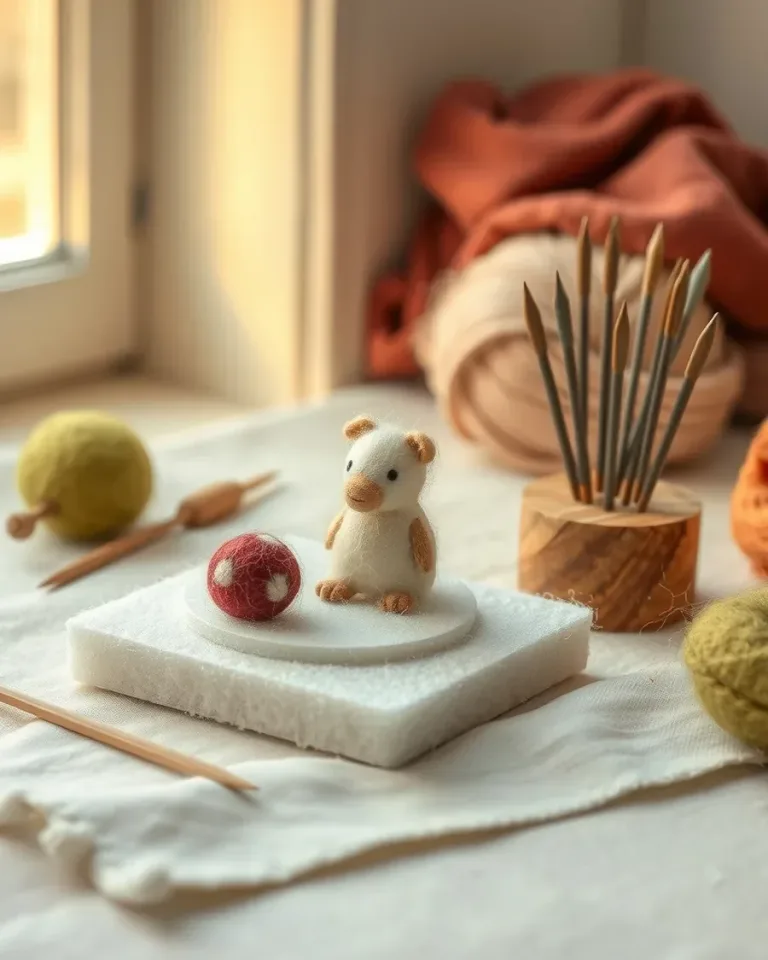
Needle felting needs no water at all. The tool is a long, thin needle with tiny barbs near the tip. Each time the needle goes in, its barbs catch a few fibres and push them deeper, tangling them with the rest; on the way out the needle slides free. Thousands of jabs turn a soft cloud of wool into a firm shape.
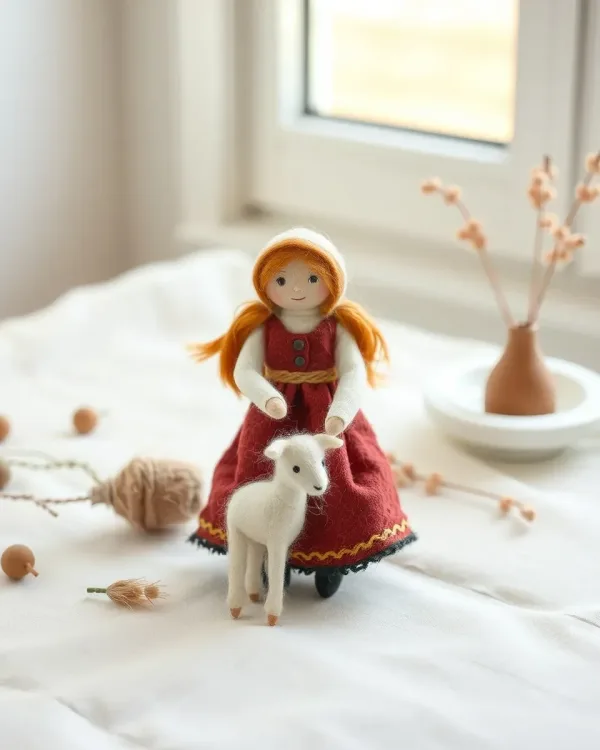
Because the maker decides where every fibre goes, needle felting is well suited to three-dimensional figures and fine detail: faces, little hands, a tiny lamb, the folds of a cloak. It is slow work — a small doll can take many hours — and every piece ends up with its own character.
Well suited to: dolls, small animals and details on wet-felted pieces.
How to recognise it: a firm, sculpted shape and very fine details.
Often combined
The techniques are not rivals. A wall panel can be wet-felted first and then finished with needle-felted berries and leaves; a doll can wear a little wet-felted cloak. Knowing the technique helps you understand what you are looking at — and how to look after it. Felted wool needs a little different care from knitted wool; we explain it step by step in our guide to washing and caring for felted wool.
Which one is right for you?
- You want something warm and sturdy for winter: look at wet-felted scarves, hats and bags.
- You want something light for indoors or spring: choose nuno-felted silk and wool.
- You are looking for a gift with character or a piece for a shelf: needle-felted dolls and figures.
Each piece in our catalogue lists its technique and materials, so you always know how it was made. If you like a piece but need another colour or size, we can often make a similar one for you — just send us a request.