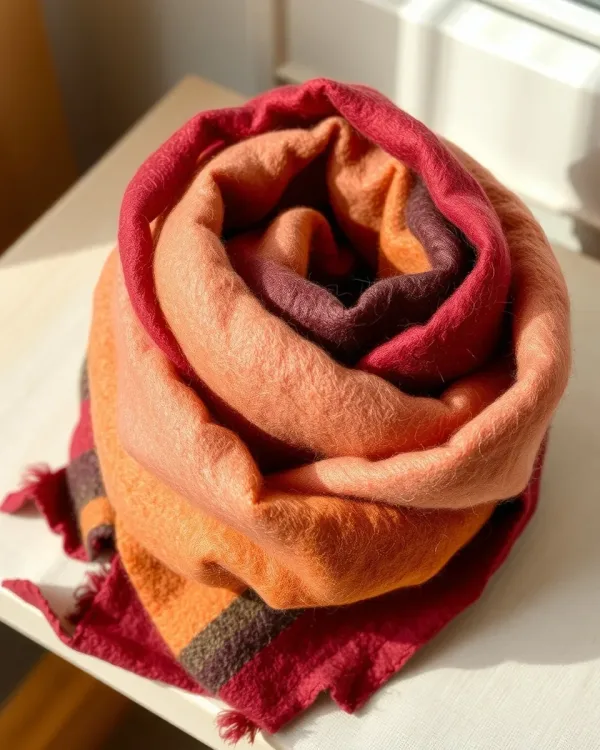
How to wash and care for felted wool
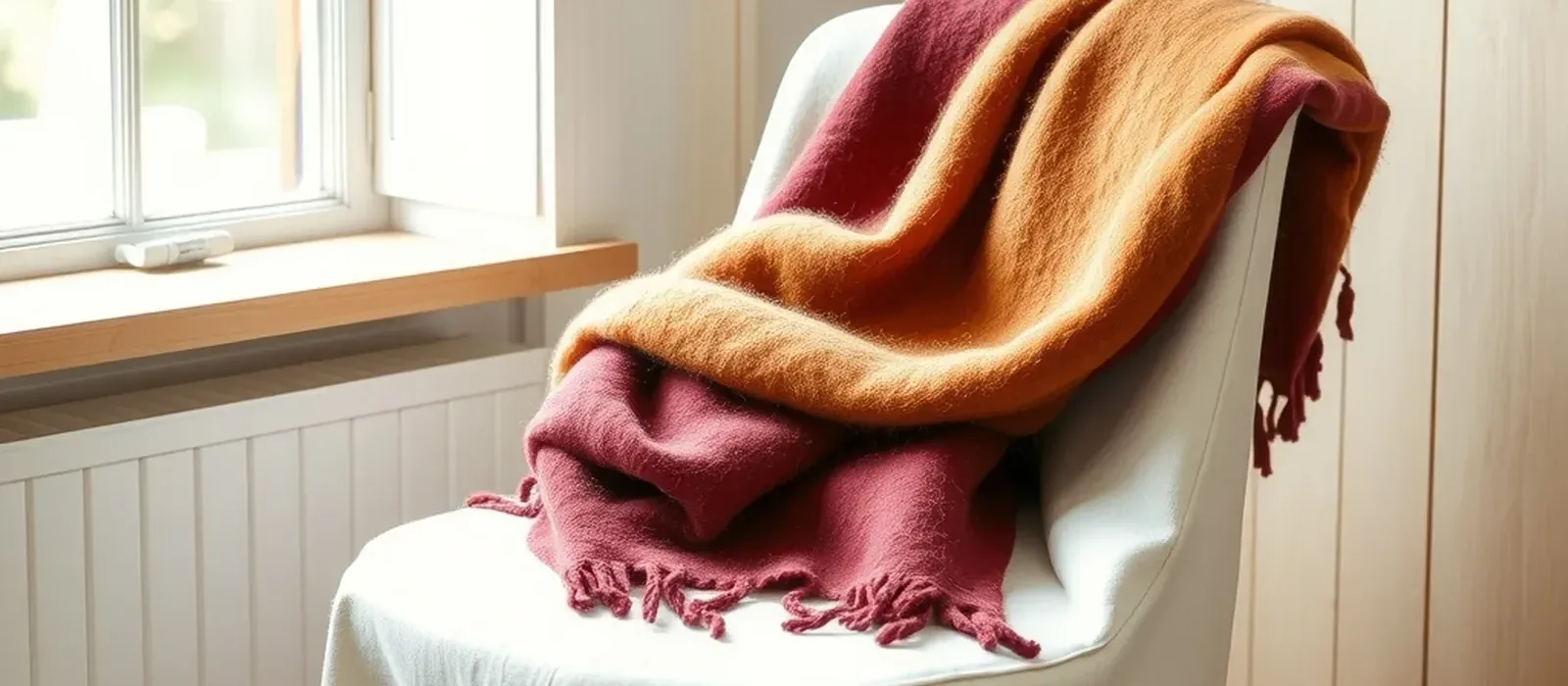
Many people are a little afraid of felted wool: what if it shrinks, pills or gets eaten by moths? The good news is that felt has already been shrunk on purpose — that is how it is made — so it is sturdier than it looks. Heat, soap and rubbing can still shrink it a little more, though, so a few simple habits are worth knowing. With them, a felted wrap, hat or bag will stay beautiful for years.
Air it more, wash it less
Wool needs washing far less often than most fabrics. It resists dirt and lets go of smells after a few hours in fresh air. After wearing, hang the piece over a chair or outside in dry, shaded weather instead of washing it.
Small spots can usually be removed by dabbing — not rubbing — with a damp cloth and a drop of wool wash. Brush dry dirt off with a soft clothes brush once it has dried. Hand-dyed wool can bleed, so test a hidden corner with a damp white cloth first.
How to wash felted wool by hand
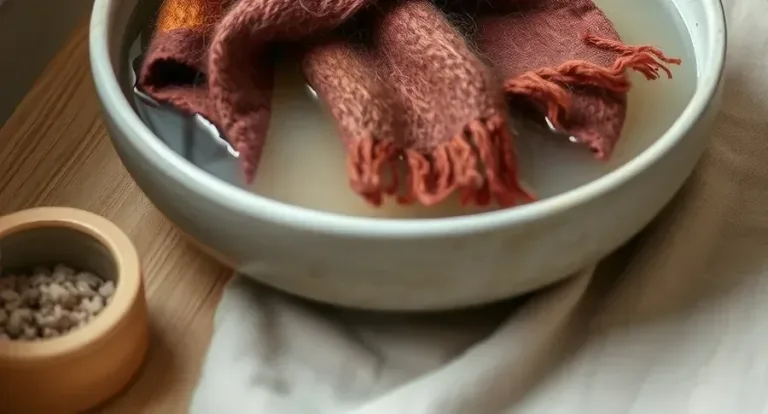
Felting happens through warmth, soap and friction, so the aim is to give the wool as little of all three as possible:
- Fill a basin with cool or lukewarm water, about 30 °C at most, and add a little gentle, enzyme-free wool detergent. Enzymes can damage wool and silk; avoid bleach and fabric softener too.
- Put the piece in and gently press it under the water. Let it soak for 5–10 minutes. Do not rub, twist or scrub.
- Rinse in water of the same temperature. A sudden change from warm to cold can shrink or felt the wool further, especially combined with rubbing.
- Lift the piece out with both hands, supporting its weight, and gently squeeze out the water — never wring.
Nuno-felted pieces with silk need the same care, only even more gently: keep the soak short, no more than 10 minutes. If the care note of a particular piece says something different, follow the note.
Drying: flat and in shape
Roll the piece in a dry towel and press to take out most of the water. Then lay it flat on a fresh towel or a drying rack, shape it with your hands and leave it to dry away from radiators and direct sunlight. Hats can dry over a bowl or a ball of the right size so they keep their form. Do not hang wet wool on a line — the weight of the water will stretch it. Never tumble dry, and do not use a washing machine’s spin unless the care note allows it.
Pilling and fluff
Soft merino can form little balls where there is a lot of friction, for example under a bag strap. This is normal for fine merino. Snip the pills off with small scissors or use a wool comb. A fabric shaver can cut into the felt surface, so avoid it on nuno-felted silk, and do not pull pills off — that draws fibres out.
Storing and protecting from moths
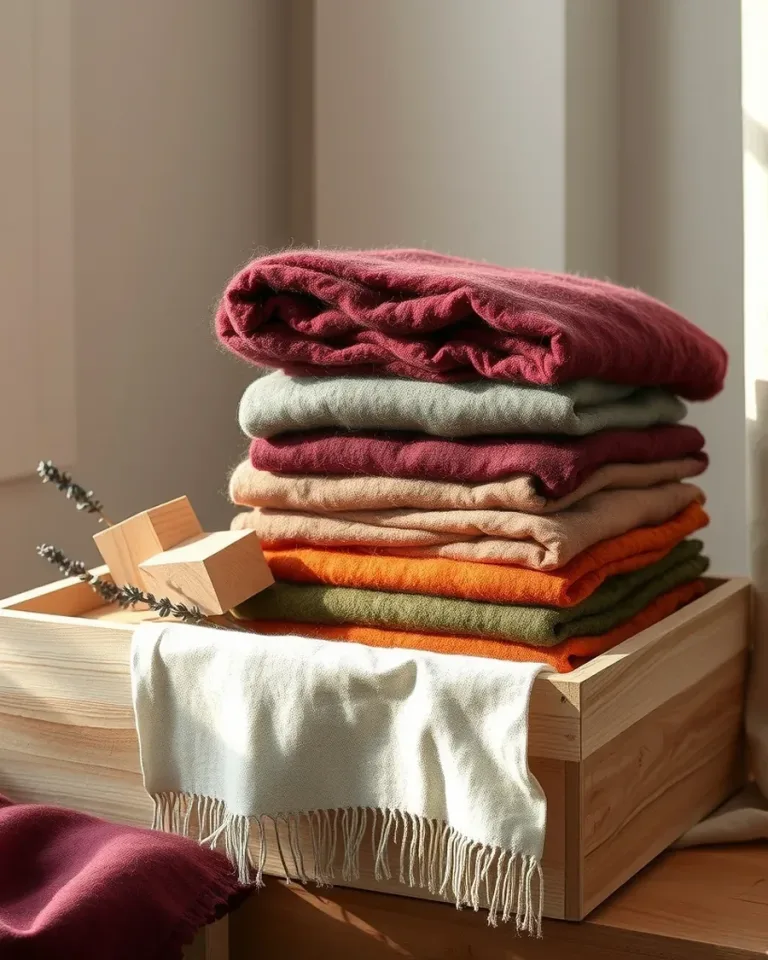
Clothes moth larvae feed on wool, and they prefer wool with traces of sweat, skin or food, so clean pieces are much less tempting. Cedar and lavender smell lovely, but they are not reliable moth protection. What really helps:
- Store only clean pieces.
- Fold rather than hang heavier pieces, so they do not stretch.
- Keep them in a closed box or a cotton bag, not in sealed plastic where moisture can collect.
- Out of season, take your pieces out every few weeks, shake and air them: moths dislike light and disturbance.
- If you suspect moths, seal the piece in a bag and freeze it for a few days.
Dolls, panels and decorative pieces
Needle-felted dolls and wall panels should not be washed. Many dolls have a wire frame inside, so never soak them. Keep them out of direct sunlight so the colours stay bright, and remove dust with a soft brush or a hairdryer on cool, held at a distance. If a panel gets stained, ask us before trying to clean it.
How we look after our own pieces
In the studio we follow the same simple rules. We air our wraps on the balcony far more often than we wash them, and when we do wash, it is by hand in a basin of lukewarm water with a mild wool wash. Pieces we are not using go into a closed box, and every few weeks we take them out to look at them and give them a shake. That is all it takes.
Quick summary
- Air often, wash rarely.
- Hand wash cool with an enzyme-free wool detergent; no rubbing, no wringing.
- Dry flat and in shape, away from heat; never tumble dry.
- Store clean, folded and in a closed box or cotton bag.
Every piece we make comes with its own care notes, and you can always ask us if you are unsure. More short answers are on our questions & answers page.